
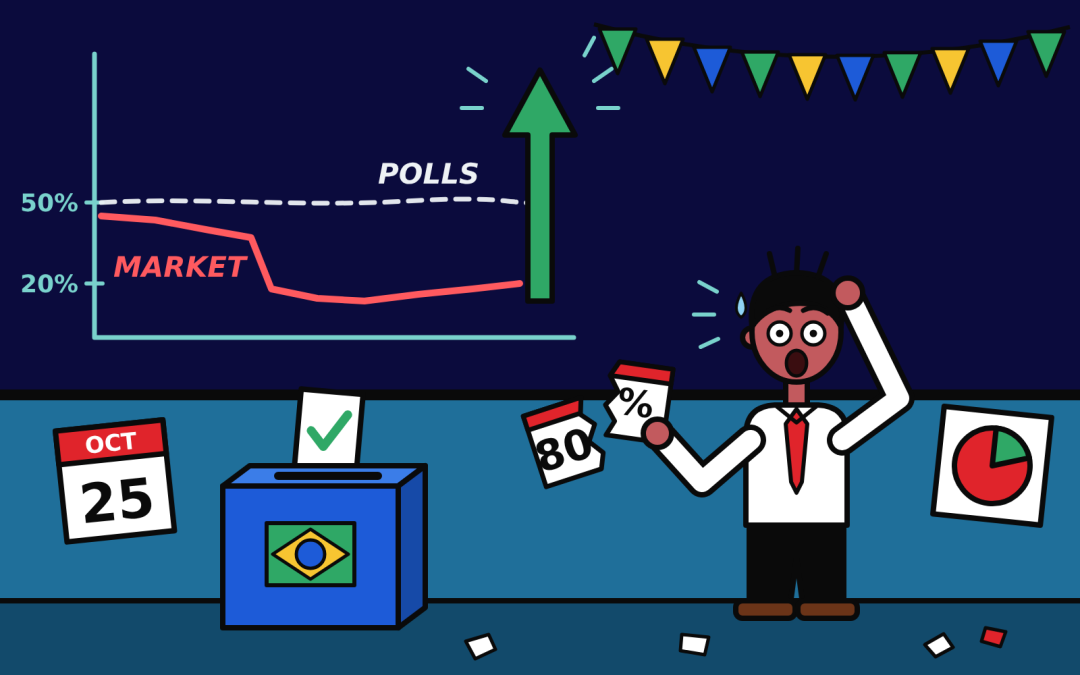
In 2024, prediction markets backed Donald Trump while the polls called a toss-up, and they were right. In Brazil, the same confidence has now backfired: hours before the October 25 runoff, Polymarket gave Senator Flávio Bolsonaro roughly 80% odds of unseating President Luiz Inácio Lula da Silva, and Kalshi, its U.S. rival, priced him almost identically. Lula won with 51.8% of the vote, becoming the first Brazilian president to win a fourth term and the first to recover from a first-round defeat. Play money fared no better. On Manifold, where users bet virtual currency instead of real dollars, Lula traded near 20% in the final week.
The gap between polls and prices tells the story. A month before the runoff, Polymarket still gave Lula about 45%. Then the first round handed traders a precedent: pollsters underestimated Bolsonaro by up to 5 points, and the markets beat them. The runoff polls barely moved, ending in a statistical tie of 51% to 49% for Bolsonaro, yet the markets pushed Lula down to 20%. Prediction markets are also banned in Brazil itself, so the money came largely from abroad.
Whether the markets were wrong is another matter. Traders are split: an 80% favorite should lose one time in five, and investor Nic Carter asked whether the upset was simply “normal variance.” One race cannot settle a market’s calibration, but it raises the question of how much weight decision-makers should give market odds that part ways with the polls. Financial markets had placed the same bet, and a contract tied to Brazilian stocks fell more than 20% once Lula’s win was clear.
Full Story in Bitcoin.com News
Discover more from Forecasting Strategy
Subscribe to get the latest posts sent to your email.