
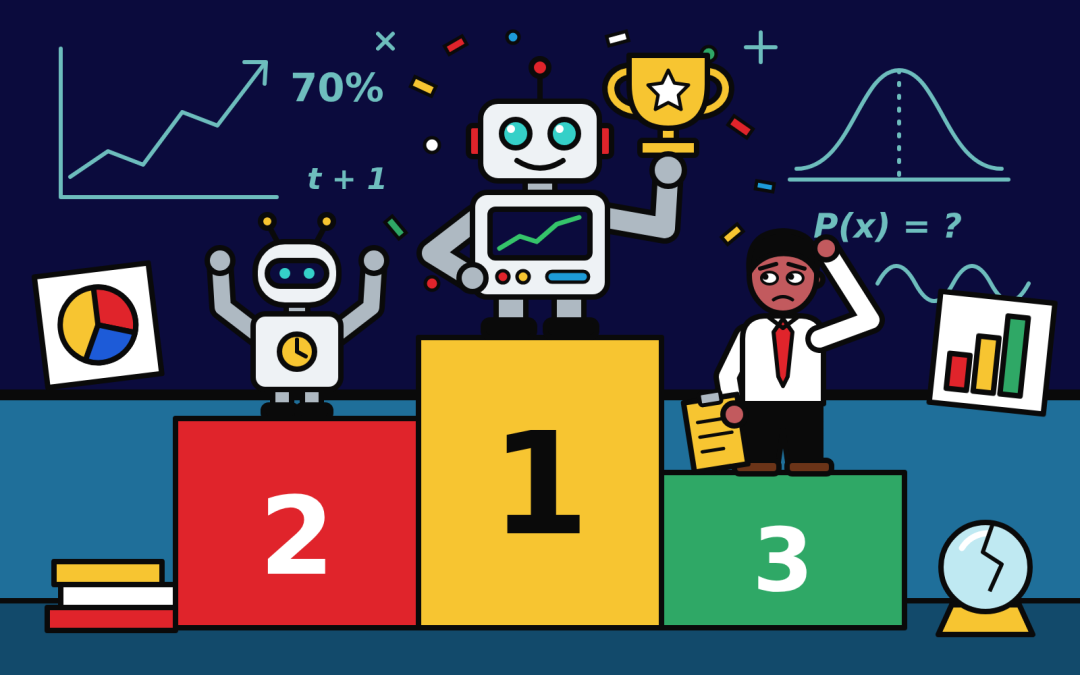
For the first time, an AI has won the Metaculus Cup, a seasonal tournament in which hundreds of forecasters predict real-world events. In the round decided on September 5, other bots took second and fifth place, leaving humans third and fourth. The winning bot was built by Jeffrey Liang, a self-described polymath in Texas, in less than 150 hours and for a couple of thousand dollars. It beat four startups that have together raised more than $15 million. A July analysis by the Forecasting Research Institute likewise suggests that AI systems have reached parity with “superforecasters.”
These bots are generalists. Unlike weather models built for one narrow field, they run on the same large language models behind the AI boom. They read news and data as human forecasters do, only faster and more broadly, and they can explain their reasoning. The strongest systems add extra tricks: several models that debate a question, paywalled datasets, and a memory that can be wiped to replay past questions. Liang’s low-budget win, however, leaves it unclear whether such extras are decisive.
The caveats are real. The cup’s human entrants are not necessarily the world’s best, and its four-month horizon says little about forecasting years ahead, where Yann Riviere of British startup Mantic believes human judgment still holds an edge. Forecasting is also getting cheaper: a superforecaster prediction can cost more than $10,000 and take a week, while the startup FutureSearch asks for ten minutes and a few dollars. If the machines keep improving, they may reveal where prediction ends: which parts of the future are beyond knowing, and which are not yet known.
Discover more from Forecasting Strategy
Subscribe to get the latest posts sent to your email.