
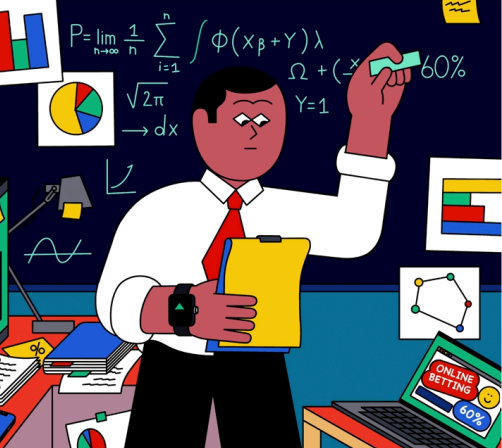
Prediction markets like Kalshi and Polymarket where anyone can bet real money on future events are proving surprisingly competitive with professional economists. A working paper by the National Bureau of Economic Research found that over Kalshi’s five-year existence, its crowd of anonymous gamblers matched trained forecasters at predicting economic data, and even outperformed them on inflation. A separate study found Polymarket bettors collectively beat professional equity analysts at forecasting corporate earnings.
The edge lies in incentive design. Professional forecasters must publish estimates every month regardless of their confidence, and may be swayed by conflicts of interest or herd mentality. Bettors only participate when they feel they have an edge. And with real money on the line, they are motivated to state their true beliefs. High-volume traders also tend to specialize, performing best in their own domain of expertise.
The implications are significant. If prediction markets continue to outperform, they could reshape how institutions, including central banks like the Federal Reserve, incorporate outside signals into their decision-making, democratizing a process long dominated by a small elite of senior economists. At the same time, a world where crowd forecasts replace independent analysts entirely would be self-defeating: the markets largely derive their accuracy by aggregating professional research in the first place. Most economists therefore see prediction markets as a complement rather than a replacement. On the horizon, AI adds yet another contender, though experts believe human judgment will remain essential wherever data is sparse and the environment rapidly shifting.
Full story at NYT
Discover more from Forecasting Strategy
Subscribe to get the latest posts sent to your email.